
925 Sterling Silver Basics: What "S925" Really Means for Wholesale
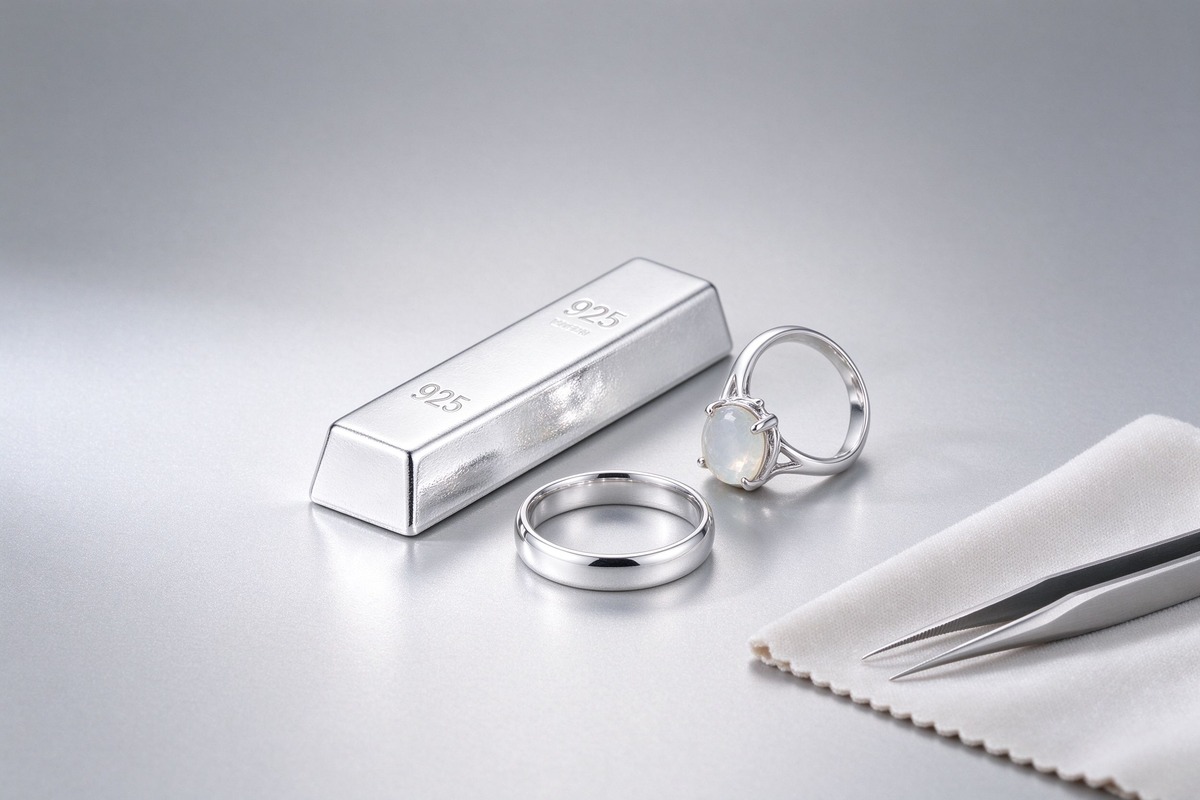
"925" appears on nearly every piece of silver jewelry sold wholesale. Most buyers read it as "real silver" and move on. That is half right — and the missing half is where quality problems and margin surprises usually come from.
Here is what the mark actually means, why sterling is the standard for stone-set jewelry, and what to verify before you place a wholesale order.
What "925" Actually Means
925 means the alloy contains 92.5% pure silver by weight. The remaining 7.5% is alloy — usually copper, sometimes with a small amount of other metals — added deliberately, not as filler.
Pure silver (999) is soft. Too soft, in fact, for everyday rings and prong settings: prongs bend, edges round off, and stones work loose. The 7.5% alloy hardens the metal enough to hold a setting and survive daily wear, while keeping the color and feel of silver.
On the piece itself, the mark is usually stamped as S925 or 925. A mark is a declaration by the maker — the real verification is a material report, which is why batch-level silver purity documentation matters on wholesale orders.
925 vs 999 vs Plated Base Metal
| Property | 925 Sterling Silver | 999 Fine Silver | Plated Base Metal |
|---|---|---|---|
| Silver content | 92.5% | 99.9% | 0% — base metal with plating |
| Hardness | Hard enough for prong settings and daily wear | Soft; prongs deform, edges wear | Hard base, but finish depends on plating |
| Stone setting | Secure four-prong and bezel settings | Not ideal for prongs; better for simple designs | Glue or simple settings; stone loss is a risk |
| Finish over time | Tarnishes slowly; rhodium plating extends brightness | Tarnishes faster; scratches easily | Plating wears at contact points and edges |
| Best role | Everyday fine jewelry with stones | Collectible and investment pieces | Fast fashion and gift lines |
What the 7.5% Alloy Changes for Buyers
Color. The alloy mix affects the final tone — from bright white to a warmer grey. Rhodium plating can push it brighter, but plating is a surface finish, not a material claim.
Skin sensitivity. Nickel is the common allergen in cheap alloys. Sterling for export can be produced nickel-free, and nickel-release compliance documentation can be provided by production batch — a batch-level report, not a blanket certificate.
Tarnish behavior. Silver reacts with sulfur and humidity. Anti-oxidation bags, proper storage and rhodium plating all slow the process, but no silver piece is tarnish-proof forever.
What to Check on a Wholesale 925 Order
1. The mark and the report. Look for S925/925 stamping — then ask for batch-level silver purity documentation. The mark alone proves nothing.
2. Plating spec. Rhodium, gold-tone or e-coat — each has a different wear profile. Plating thickness should be stated, not assumed.
3. Setting stability. Check prong alignment, stone seat and edge finish on the physical sample — the four points that fail first after shipping.
4. Batch consistency. Re-orders must match the approved sample: same alloy tone, same plating look, same setting geometry.
Three Myths That Cost Buyers Money
"925 means pure silver." It means 92.5% silver. That is the standard for durable jewelry, but it is not 999 — and pricing should reflect the difference.
"Heavier is always better." Weight matters for perceived value, but excess metal can make a ring uncomfortable and add cost without adding sales appeal. Design intent should drive weight.
"Plated means silver." Plated base metal is a different product at a different price point. It can be a legitimate fast-fashion item — but it must be labeled and priced as one.
How We Confirm Material Requirements
At our workshop in Meilong, 925 sterling silver requirements are confirmed per project — alloy, plating and finish are agreed against your specification rather than assumed from a catalog photo. Every production batch passes the same in-line checks: silver content, plating thickness, stone-setting stability and dimensions, with batch-level documentation available for silver purity and nickel-free REACH compliance.
If you are comparing suppliers on "925" alone, you are comparing a stamp, not a product. Ask for the report, the plating spec and the sample.
Need 925 silver specs confirmed for your next order?
Tell us your alloy, plating and stone-setting requirements — we will confirm them in writing.
Send Your Inquiry